
Understanding why the name of an ingredient is rarely enough to establish its regulatory status.
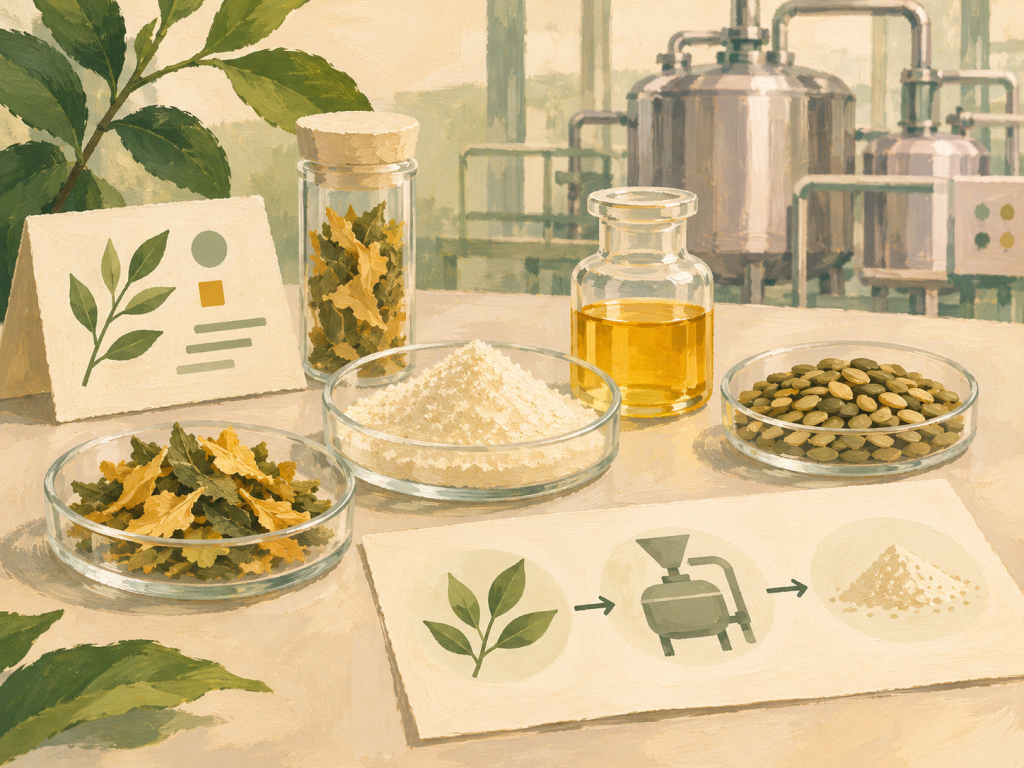
A botanical powder, a concentrated extract and a substance produced through fermentation may all be described with similar commercial names. From a novel food perspective, however, they can raise very different questions. The key issue is not simply whether the ingredient name is familiar. It is whether the particular food, in its particular form and intended use, falls within the applicable definition of a novel food or an existing authorisation.
This distinction matters to supplement manufacturers, ingredient suppliers and brands because an error made during product development can surface much later as a regulatory obstacle, even after manufacturing, artwork and marketing have been completed.
What is a novel food?
Under Regulation (EU) 2015/2283, the starting point is whether the food was used for human consumption to a significant degree within the EU before 15 May 1997, together with the categories set out in the Regulation. New technologies, certain production processes, novel sources and other specified circumstances can also bring a food within the regime. Great Britain has corresponding novel food law, but operates a separate authorisation system following Brexit.
Novel does not simply mean recently invented. A traditional food eaten for many years outside the EU can still be a novel food under the applicable rules. Nor does a familiar plant name necessarily resolve the position of a new extract, isolated constituent or preparation produced in a fundamentally different way.
The importance of precise ingredient identity
A meaningful regulatory review starts with a clear description of the material. For botanical ingredients, the information commonly required includes the accepted scientific name, plant part, preparation type, extraction solvent, extraction ratio, key constituents and relevant composition specifications. For fermentation-derived materials, the producing organism, strain, manufacturing process and final composition can be central.
A trade name on a supplier’s product sheet is rarely sufficient. The analyst needs to know what the ingredient actually is and whether the evidence supporting its historical use or authorisation applies to that material. Evidence concerning a whole botanical used in ordinary foods does not necessarily establish that a highly concentrated isolated fraction has the same history.
Why manufacturing processes can change the answer
The Novel Food Regulation expressly considers certain foods resulting from production processes not used for food production in the EU before 15 May 1997 where those processes give rise to significant changes in composition or structure affecting nutritional value, metabolism or levels of undesirable substances.
Possible examples for investigation include new extraction or purification techniques, precision fermentation, altered cultivation processes and modifications that substantially concentrate particular constituents. Not every change in manufacturing technique creates a novel food. The relevant legal criteria must be assessed against evidence of the resulting material and its history, rather than assuming either outcome.
This is why a manufacturer’s statement that an ingredient is “natural”, “traditional” or “the same plant” is not, on its own, a determination of regulatory status.
How the European Commission’s Novel Food Catalogue should be used
The European Commission provides a searchable Novel Food status Catalogue covering a wide range of foods, including plants, algae, fungi, microorganisms and other substances. It is an important starting point, particularly because it records information supplied by EU Member States and sometimes distinguishes a food’s history of use in supplements from its history in other foods.
However, the Commission explicitly describes the Catalogue as non-binding and non-exhaustive. An ingredient’s absence does not establish that it is non-novel. Nor does a catalogue entry automatically confer market authorisation. A careful assessment also considers the legislation, the relevant product description, available historical evidence and, where necessary, the competent authority’s position.
For foods previously used exclusively in food supplements in the EU before the cutoff date, extending that ingredient to conventional foods may itself trigger novel food requirements. An established supplement use therefore does not necessarily authorise every other food use.
What an authorisation permits
The EU Union list of authorised novel foods, established under Commission Implementing Regulation (EU) 2017/2470 and subsequently amended, is the central record of authorised novel foods for the EU. Entries may specify the authorised food, specifications, permitted food categories, maximum use levels, additional labelling requirements and other conditions.
The legal question is not merely “Is the ingredient listed?” It is “Does the ingredient comply with the actual entry, and is its proposed use covered?” An authorisation for a particular oil, powder or fermentation-derived ingredient cannot be assumed to cover a materially different specification or manufacturing process. Some authorisations may also involve data-protection restrictions that affect who can rely on them for a defined period.
The GB authorisation position
Great Britain maintains its own regulated-products framework and Register of Novel Food Authorisations. Since the April 2025 changes to GB authorisation procedures, ministerial decisions and the published FSA/FSS registers have particular importance as the legal record of authorised regulated products. The register is the appropriate starting point for checking current GB permissions and conditions.
A product lawfully authorised in the EU is not automatically authorised in GB under current rules, or vice versa. The proposed UK–EU SPS Agreement could change the position, but negotiations were still ongoing on 30 October 2026. The Food Standards Agency has stated that, subject to any negotiated exceptions, EU authorisations would apply in GB when an agreement enters into force and GB-only authorisations would cease to apply. That future intention does not displace current law.
A practical identity-and-status review
| Question | Evidence or decision required |
|---|---|
| What exactly is the material? | Scientific/chemical identity, plant part or organism, preparation and specification |
| How is it manufactured? | Process description, extraction method, solvents, fermentation strain or purification steps |
| What is the history of consumption? | Evidence relevant to the specified food, region, use and pre-15 May 1997 date |
| Is there an authorisation? | Current EU or GB entry, including specifications, food categories and use conditions |
| Is the proposed use covered? | Product classification, daily intake, target consumers and supplementary labelling |
| Are there other restrictions? | Safety, national rules, medicinal classification, additives, contaminants and claims |
These questions should be resolved before the ingredient is commercially committed to a finished formulation.
Why commercial timing matters
The cost of identifying a novel food issue is generally lower before product development than after a production run. An early review can reveal that further specifications, historical evidence, a change of source or a different formulation is needed. It can also help a business distinguish between an ingredient that is genuinely ineligible, one that may already be authorised subject to conditions, and one whose status remains uncertain because the available evidence is inadequate.
Conclusion
Novel food compliance begins with identity, not with a keyword search. Exact composition, manufacturing history, intended use and current authorisation conditions determine whether an ingredient can be used. A carefully maintained ingredient specification and a documented status assessment provide a firmer foundation than a generic supplier assurance that a material is “non-novel”.